Google Ads Vs Meta Ads : In 2026 Digital advertising going to be more competitive, data-driven, and AI-powered than before. Brands are investing billions in paid ads, but achieving consistent ROI is still a challenge. This has made the Google Ads vs Meta Ads debate more relevant because every brand wants their growth and recognization . Here’s comes most important key question which platform delivers better results in today’s evolving marketing landscape?
The Paid Advertising Landscape in 2026
The Paid Advertising Landscape in 2026
The paid advertising landscape in 2026 is more competitive and intelligent than ever before. AI-driven targeting, automation, and real-time data analysis now define how brands reach their audiences. With rising ad costs and stricter privacy regulations, businesses must focus on smarter strategies, personalization, and performance-driven campaigns to stay ahead and achieve sustainable growth.
Why Compare Google Ads vs Meta Ads?
Google Ads Vs Meta Ads dominate the digital advertising space, but they serve different marketing goals. Google Ads targets users with high intent who are actively searching for products or services, while Meta Ads focus on audience discovery and engagement through social platforms. Comparing the two helps businesses choose the right platform based on objectives, budget, and expected ROI—ensuring smarter ad spend and better results.
Book a Consultation with OptxDigi !
Not sure whether Google Ads vs Meta Ads are right for your business? Let the experts at OptxDigi guide you with a customized advertising strategy. Book your consultation today and discover how our digital marketing solutions can drive real growth for your brand. Contact-Us NOW
Overview of Google Ads (2026) and Meta Ads (2026)
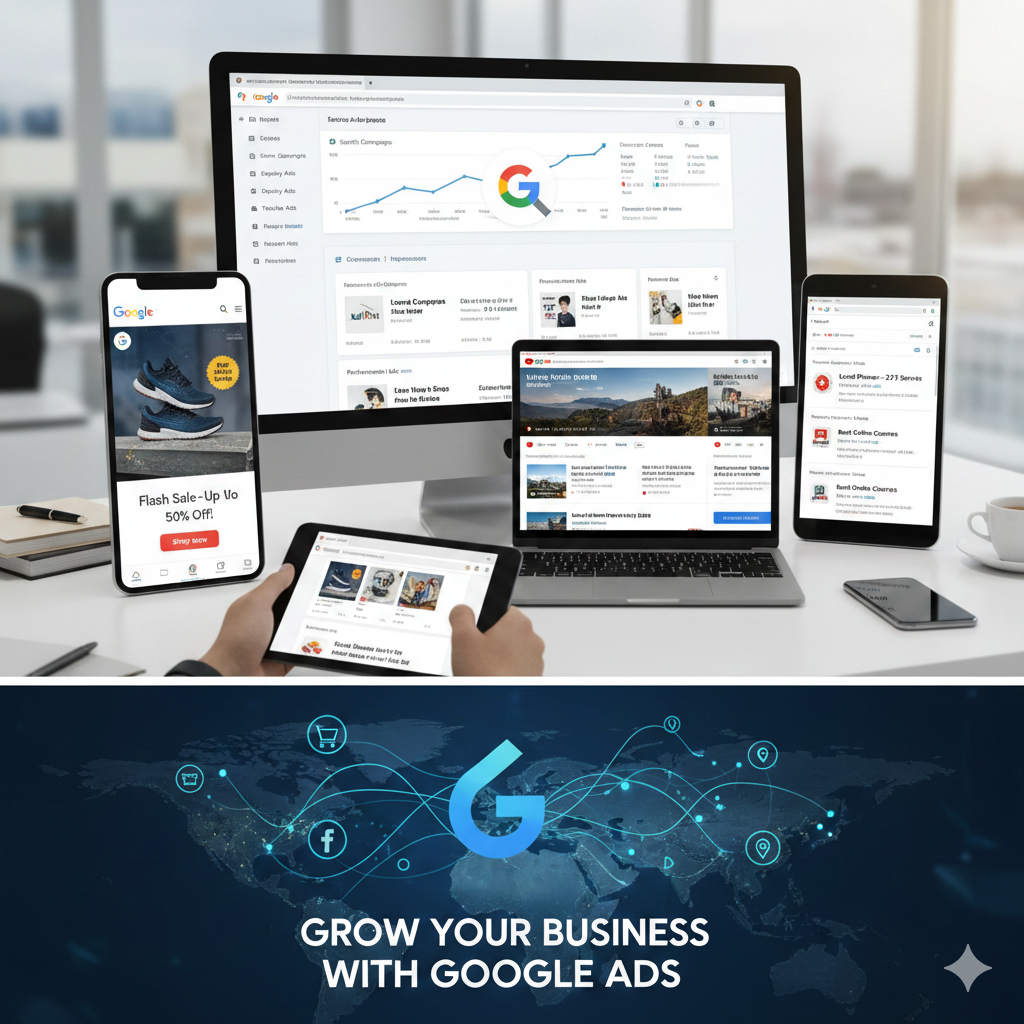
What Are Google Ads?
Google Ads is Google’s paid advertising platform that allows businesses to promote their products and services across Google Search, YouTube, Gmail, and millions of partner websites. In 2026, Google Ads is more AI-driven than ever, helping advertisers reach high-intent users at the right moment with automated bidding, targeting, and creative optimization.
Major Google Ads Formats
Search Ads
Search Ads appear at the top of Google search results when users actively look for specific products or services. These ads are highly intent-driven, making them ideal for lead generation, sales, and conversions.
Display Ads
Display Ads are visual banner ads shown across Google’s Display Network, reaching users on websites, apps, and Gmail. They are effective for brand awareness, retargeting, and expanding reach beyond search.
YouTube Ads
YouTube Ads allow brands to connect with audiences through video content on the world’s largest video platform. In 2026, video ads are powered by advanced AI targeting, making them highly effective for storytelling, engagement, and brand recall.
Performance Max
Performance Max is a goal-based campaign type that uses AI to run ads across all Google channels from a single campaign. It automatically optimizes placements, creatives, and bids to maximize conversions and overall performance.
Key Google Ads Trends in 2026
In 2026, Google Ads is dominated by automation and first-party data. AI-led bidding strategies, predictive analytics, and creative optimization have become standard. With increasing privacy restrictions, advertisers rely more on consent-based data and smart audience signals. Performance Max, video-first strategies, and cross-channel integration continue to shape the future of Google advertising.
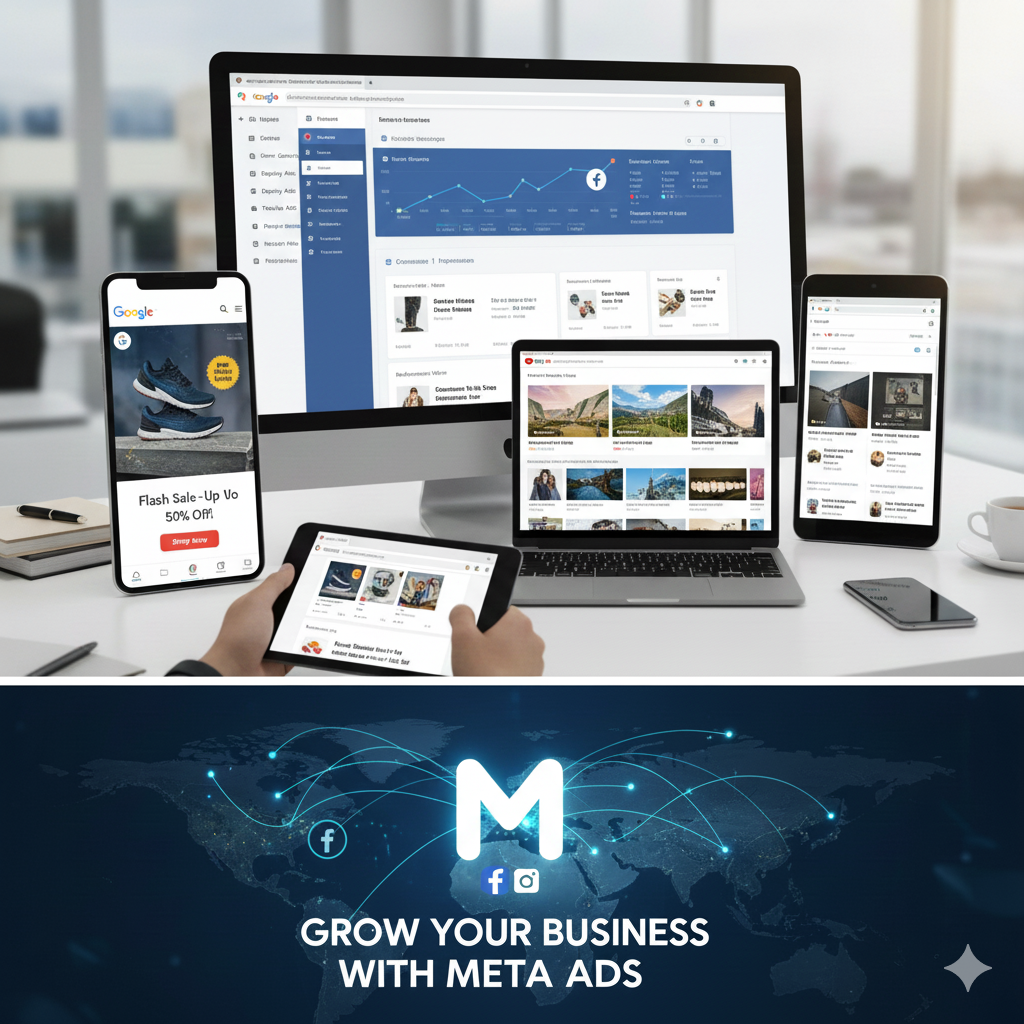
What Are Meta Ads? (Facebook, Instagram, WhatsApp)
Meta Ads is Meta’s advertising platform that allows businesses to promote their products and services across Facebook, Instagram, WhatsApp, and the Meta Audience Network. In 2026, Meta Ads focus heavily on AI-powered audience targeting, creative optimization, and personalized ad experiences to help brands connect with users throughout their social journey.
Major Meta Ads Formats
Feed Ads
Feed Ads appear seamlessly within users’ Facebook and Instagram feeds. These ads support images, videos, and carousels, making them ideal for brand awareness, engagement, and conversions.
Stories & Reels Ads
Stories and Reels Ads are full-screen, vertical ads designed for mobile-first audiences. With short-form video dominating social platforms in 2026, these formats deliver high engagement and strong visual impact.
Click-to-WhatsApp Ads
Click-to-WhatsApp Ads allow users to start direct conversations with businesses on WhatsApp. This format is especially effective for lead generation, customer support, and personalized sales interactions.
Key Meta Ads Trends in 2026
In 2026, Meta Ads are driven by AI automation, predictive targeting, and creative testing. With limited third-party data due to privacy changes, Meta relies on machine learning and first-party data to deliver results. Short-form video, conversational ads, and social commerce integrations continue to grow, making Meta Ads a powerful platform for engagement-focused and performance-driven marketing.
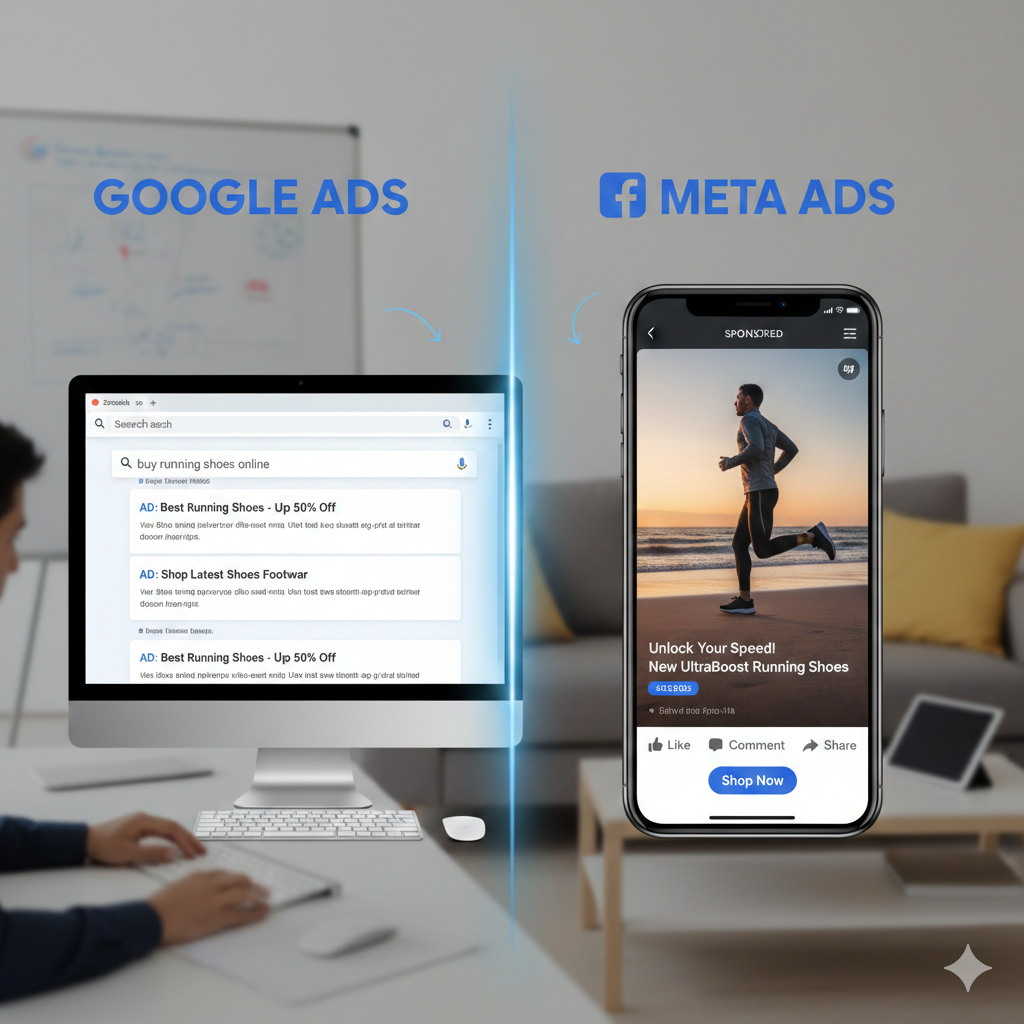
Google Ads vs Meta Ads: Conversion Comparison
Intent-Based Traffic vs Interest-Based Traffic
Google Ads primarily captures intent-based traffic, meaning users are actively searching for a product or service and are closer to making a purchase decision. This makes Google Ads highly effective for direct conversions.
Meta Ads, on the other hand, focus on interest-based traffic, targeting users based on behavior, interests, and demographics. While users may not be ready to buy immediately, Meta Ads excel at creating demand and nurturing potential customers.
Cost Per Conversion Comparison
Google Ads often has a higher cost per conversion due to strong competition for high-intent keywords. However, the likelihood of conversion is usually higher.
Meta Ads generally offer a lower cost per conversion, especially for awareness and lead generation campaigns, but may require multiple touchpoints before users convert.
Conversion Quality & Buyer Readiness
Conversions from Google Ads typically show higher buyer readiness, as users are already searching for solutions. These leads often convert faster with stronger purchase intent.
Meta Ads conversions may vary in quality, as users are discovered earlier in the funnel. However, with proper retargeting and personalization, Meta Ads can deliver high-quality leads and long-term customer value.
Google Ads Convert Better :
High-Intent Keywords
Google Ads perform best when users search with clear purchase intent, such as “buy,” “price,” or “best near me.” These keywords attract users who are already looking to take action.
Urgent Buyer Searches
Searches driven by urgency—like emergency services, same-day delivery, or immediate solutions—convert faster on Google Ads because users need quick answers.
Local & Service-Based Queries
Google Ads are highly effective for local businesses and service providers. Location-based searches help connect businesses with nearby customers ready to contact or visit.
Meta Ads Convert Better
Full-Funnel Brand-to-Conversion Strategy
Meta Ads excel in full-funnel marketing, guiding users from brand awareness to consideration and conversion through repeated exposure and storytelling.
Impulse-Buying Products
Products that rely on emotional appeal, visual attraction, or trends—such as fashion, beauty, and lifestyle items—often convert better on Meta platforms.
Retargeting Warm Audiences
Meta Ads are extremely effective for retargeting users who have previously engaged with a brand, visited a website, or interacted with social content, leading to higher conversion rates.
Common Mistakes That Reduce Conversions In Both [ Google Ads Vs Meta Ads
Choosing the Wrong Campaign Objective
Selecting an incorrect campaign objective can misalign your ads with your actual goals. For example, running traffic or engagement campaigns when the goal is conversions often results in clicks without meaningful results.
Poor Landing Page Experience
Even the best ads fail if the landing page is slow, confusing, or not mobile-friendly. A clear message, fast loading speed, and strong call-to-action are essential to convert visitors into customers.
Tracking, Pixel & Conversion Errors
Incorrect setup of tracking tools like Google Tags, Meta Pixel, or conversion events leads to inaccurate data and poor optimization. Without proper tracking, ad platforms cannot learn or optimize effectively, resulting in wasted ad spend.
Ready to Scale Your Business with Google Ads vs Meta Ads?
Whether you want high-intent leads from Google Ads or powerful audience growth through Meta Ads, choosing the right strategy makes all the difference. OptxDigi helps businesses plan, run, and optimize result-driven ad campaigns tailored to your goals. Visit optxdigi.com and partner with a trusted digital marketing agency to maximize your ad performance in 2026.
Conclusion
In 2026, successful digital advertising is no longer about choosing Google Ads Vs Meta Ads, but about using them together in the right way. Google Ads help capture high-intent users who are ready to convert, while Meta Ads build awareness, engagement, and trust over time. With AI-driven optimization, rising competition, and privacy-focused targeting, businesses must align each platform with clear goals, strong creatives, and accurate tracking. Brands that adopt a balanced, data-driven approach across both platforms will achieve better conversions, higher ROI, and long-term sustainable growth.
Final Verdict: Which Converts Better in 2026?
There is no single winner between Google ads vs Meta ads . Google Ads converts better for high-intent, ready-to-buy users, while Meta Ads convert better for discovery, engagement, and full-funnel nurturing. The best-performing brands in 2026 use both platforms strategically.
If your goal is immediate sales, leads, or service inquiries, Google Ads is often the stronger choice due to search intent and buyer readiness. It works especially well for local businesses, B2B services, and high-consideration purchases.
Meta Ads are ideal for brand building, audience growth, retargeting, and impulse-driven products. They help businesses create demand, stay top-of-mind, and guide users through multiple touchpoints before conversion.
In 2026’s AI-driven landscape, combining both platforms allows businesses to capture demand on Google while creating and nurturing it on Meta.
Frequently Asked Questions (FAQs)
Which platform is best for beginners?
Meta Ads are often easier for beginners due to lower starting budgets, visual creatives, and broader targeting. However, Google Ads can also be beginner-friendly for simple, high-intent search campaigns.
Will ad costs increase in 2026?
Yes, ad costs are expected to rise due to increased competition and automation. Businesses that focus on strong creatives, accurate tracking, and smart optimization will see better ROI despite higher costs.
Should you use Google Ads and Meta Ads together?
Absolutely. Using Google Ads and Meta Ads together creates a powerful full-funnel strategy—Meta builds awareness and interest, while Google captures high-intent conversions—resulting in higher overall performance and sustainable growth.
Which platform is better for a limited advertising budget: Google Ads Vs Meta Ads?
For a limited budget, Meta Ads are often more cost-effective as they offer lower entry costs and flexible audience targeting. Google Ads may require a higher budget due to competitive keywords, but they can deliver faster and more direct conversions. Ideally, businesses should test both platforms and allocate budget based on performance and ROI.